Bangladesh vs Fiji Flags: Design, Symbolism, and Use
Flags are more than national emblems—they are visual shorthand for identity, values, and history. Comparing the flags of Bangladesh and Fiji offers a fascinating look at how two very different nations express themselves through color, symbol, and layout. Whether you are a designer seeking inspiration, a marketer working on international campaigns, or an educator teaching cultural studies, understanding these two flags can provide practical takeaways for branding, communication, and visual literacy. This article breaks down what makes each flag distinctive, where they differ, and how you can apply those insights in real-world contexts.
What the Bangladesh and Fiji Flags Look Like
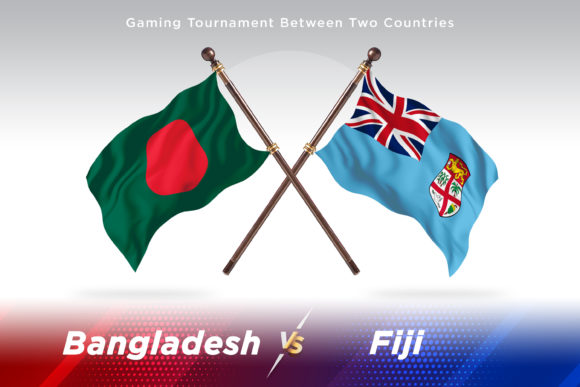
The flag of Bangladesh features a deep green field with a red circle slightly offset toward the hoist. The green represents the lush landscape and the Islamic heritage of the country, while the red circle symbolizes the sun rising over Bengal and the blood of those who fought for independence. It is clean, bold, and instantly recognizable—a single strong focal point on a solid background.
Fiji’s flag is busier by comparison. It uses a light blue field with the Union Jack in the upper hoist corner, representing its historical ties to the United Kingdom, and a shield from the national coat of arms on the fly side. The shield contains a lion holding a cocoa pod, sugarcane stalks, a coconut palm, and a dove with an olive branch—alluding to agriculture, peace, and colonial legacy. The light blue references the Pacific Ocean that surrounds the islands.
At a glance, these two flags could not be more different. One relies on minimalism and a single symbolic element; the other layers multiple references into a compact emblem. This contrast alone makes the Bangladesh versus Fiji two flags comparison useful for anyone studying how visual complexity affects perception and meaning.
Key Characteristics That Stand Out
When you place Bangladesh versus Fiji two flags side by side, several qualities become apparent:
- Color palette: Bangladesh uses two saturated colors—green and red—creating high contrast and strong visibility from a distance. Fiji uses blue, red, white, and gold, with a lighter overall tone that feels calm but can appear less punchy in digital or print applications.
- Complexity: Bangladesh has a single element. Fiji has the Union Jack plus a detailed coat of arms shield. The simpler flag scales better at small sizes; the more complex one offers more storytelling potential.
- Cultural weight: Bangladesh’s flag is directly tied to a liberation movement and carries strong emotional resonance for its people. Fiji’s flag reflects a post-colonial identity shaped by both indigenous and British influences, making it a layered conversation starter.
- Symbol placement: The centered red disk in Bangladesh’s flag is slightly off-center to create balance when the flag is flying. Fiji’s canton (the Union Jack) follows British naval tradition, and the shield is positioned to maintain visual equilibrium despite the asymmetry.
These characteristics matter when you are choosing a visual reference for a project—whether you need a flag graphic for a website, a presentation, or an educational resource. The simpler flag may reproduce better on small screens or merchandise, while the detailed flag can be more engaging in a high-resolution context.
Practical Applications in Everyday Work
The Bangladesh versus Fiji two flags comparison goes beyond curiosity. Here is how different professionals might use this knowledge:
Branding and Marketing
If you are designing a campaign that involves either country—or a campaign that compares minimal versus detailed symbolism—these flags offer case studies. For instance, a brand that wants to convey “purity, nature, and one clear promise” might take cues from Bangladesh’s approach: one dominant color, one symbol, maximum impact. A brand that wants to signal heritage, tradition, and a blend of influences could point to Fiji’s layered design as a reference. The contrast shows that neither approach is inherently superior; each works in its own context.
Educational Content
Teachers and bloggers covering flag symbolism can use Bangladesh versus Fiji two flags as a concrete example of how geography and history shape design. The green field of Bangladesh recalls its tropical landscape and Islamic tradition. The red disk ties to the struggle for independence. Fiji’s light blue field represents the Pacific, while the Union Jack anchors its colonial past, and the shield details its agricultural base. By walking through these elements, educators help students connect abstract design decisions to real-world stories.
Digital Media and UX Design
For web designers, app developers, or content creators who use flag icons, the differences between these two flags highlight practical issues. The Bangladesh flag works well at 16×16 pixels because of its high contrast and simple shape. The Fiji flag can become muddy at small sizes—the shield details may blur, and the Union Jack may lose its distinct crosses. If you are building a dropdown menu of country flags, this comparison warns you that some flags need larger display areas or simplified versions to remain legible.
Travel and Hospitality
Travel bloggers, tour operators, and hospitality businesses covering South Asia or Oceania can use flag imagery to evoke place. The Bangladesh flag suggests energy, growth, and resilience. The Fiji flag suggests serenity, natural beauty, and cultural depth. Using the right flag in the right tone—and understanding what it communicates—helps your audience feel the destination rather than just read about it.
Benefits of Understanding Flag Design
Exploring Bangladesh versus Fiji two flags in detail yields benefits that extend beyond geography:
- Improved visual communication: You learn how color, shape, and density affect comprehension and recall. Simple designs are memorable; complex ones are rich with information.
- Better cross-cultural sensitivity: Knowing what each symbol means helps you avoid misusing flag imagery. For example, placing Fiji’s shield upside down or misaligning the red disc on Bangladesh’s flag can be seen as disrespectful.
- Stronger design decisions: If you create logos, infographics, or presentations, this comparison gives you a mental tool for choosing between minimal and detailed approaches. You can ask yourself: “Do I need the impact of Bangladesh’s simplicity or the story of Fiji’s complexity?”
- Enhanced engagement: Flag comparisons naturally invite discussion. Whether you are writing, teaching, or presenting, a side-by-side analysis adds depth and relatability to your content.
Realistic Use Cases and Observations
I have seen Bangladesh versus Fiji two flags used effectively in several scenarios:
- A non‑profit website that promotes global awareness used the Bangladesh flag in its hero section to symbolize “rising hope” and the Fiji flag on another page to represent “community rooted in tradition.” The visual contrast helped visitors intuitively grasp different program focuses.
- An infographic designer included both flags in a chart comparing economic indicators in South Asia and Oceania. The designer noted that the Bangladesh flag’s strong colors dominated the grid, while the Fiji flag required a white border to stand out against the blue background.
- A travel video series used each flag as a transition graphic. The Bangladesh flag appeared as a bold full‑screen splash, while the Fiji flag was shown as a smaller badge within a scenic wide shot. The director explained that the simpler flag was better for full‑frame impact, while the detailed flag felt more like an emblem within a larger story.
These examples show that understanding the flags’ visual properties allows you to deploy them effectively—not as afterthoughts, but as intentional design choices.
Practical Considerations When Working with These Flags
If you are selecting, using, or evaluating either flag in your work, keep these points in mind:
Color Accuracy
Bangladesh’s green is a specific shade (Pantone 342) and the red is close to Pantone 032. Fiji’s blue is Pantone 298. When printing or displaying digitally, confirm that your color profile matches the official specifications. Even a slight hue change can alter the flag’s meaning or feel.
Proportions and Scaling
Bangladesh’s flag uses a 5:3 ratio. Fiji uses 1:2. If you display both flags together in a grid or chart, consider using consistent sizing with proper scaling so neither flag is distorted.
Cultural Sensitivity
Never use a flag for decoration in a way that trivializes it. A flag represents a nation and its people. In marketing or content, always pair flag imagery with respectful context. For Bangladesh, avoid showing the flag in a faded or torn condition, as it is a symbol of national pride. For Fiji, be aware that the flag has been part of ongoing discussions about identity and whether to keep the Union Jack, so treat it with awareness of that nuance.
Licensing and Usage Rights
National flags are generally in the public domain, but shield details and specific stylized versions may be trademarked or copyrighted. If you are creating merchandise, verify the exact graphic you plan to use. For digital use, high‑quality vector files are widely available from official sources or reputable icon sets.
Why This Comparison Matters for Your Work
The Bangladesh versus Fiji two flags comparison is really a lens for looking at how design reflects identity. Bangladesh chooses clarity and emotional directness. Fiji chooses storytelling and historical layers. Both approaches work, but they work in different ways for different audiences. When you understand what each flag says—and how it says it—you become better equipped to make visual choices in your own projects. Whether you are building a brand, teaching a class, or simply trying to communicate one idea without confusion, the principles behind these two flags apply far beyond national boundaries. The next time you see a flag, ask yourself: What would this look like minimal? What would it look like layered? The answer will make your work sharper, more intentional, and more effective.