Bangladesh Versus Sri Lanka Two Flags: A Detailed Comparison of Design, Symbolism, and National Identity
Flags are far more than pieces of fabric fluttering in the wind. They encapsulate the history, struggles, and aspirations of entire nations. When we examine Bangladesh Versus Sri Lanka Two Flags, we find two strikingly different visual languages that tell powerful stories about each country's journey. Bangladesh's flag is a study in bold simplicity, while Sri Lanka's flag is rich with layered iconography. Understanding these differences helps reveal not only artistic choices but also the distinct paths each nation has taken.
Visual Design and Color Palette
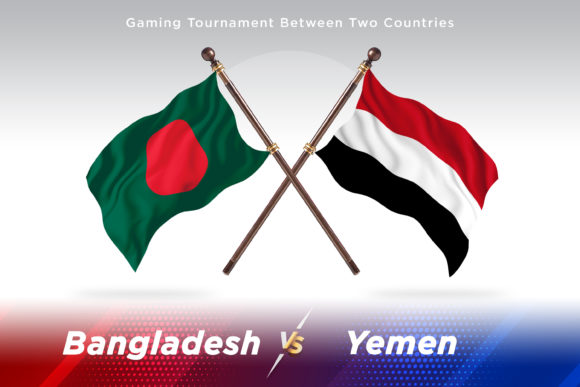
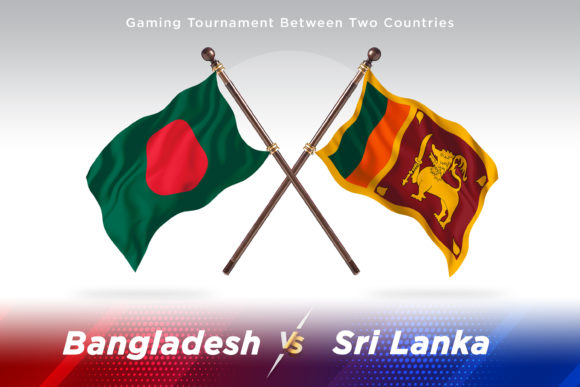
The flag of Bangladesh is immediately recognizable. It features a deep green field with a red circle slightly offset toward the hoist side. The green is not arbitrary; it represents the lush landscape of the country, while the red disc symbolizes the sun rising over Bengal, as well as the blood shed during the war of independence in 1971. There is no additional ornamentation, no coat of arms, no extra symbols. The design is deliberately minimalist, making it one of the most straightforward national flags in the world.
In contrast, Sri Lanka's flag is far more intricate. Often called the "Lion Flag," it features a golden lion holding a sword against a maroon background. There are four golden bo leaves in the corners, and along the hoist side, two vertical stripes of green and orange are present. The entire design is bordered by a golden fringe. The maroon represents the majority Sinhalese population, the orange stripe symbolizes the Tamil community, the green stripe stands for the Muslim community, and the bo leaves represent Buddhism. The lion itself is a symbol of bravery and sovereignty.
When comparing Bangladesh Versus Sri Lanka Two Flags, the most obvious difference is complexity. Bangladesh opts for a single, powerful geometric statement. Sri Lanka chooses a detailed narrative emblem. Both approaches are effective, but they appeal to different sensibilities. Bangladesh's flag is instantly memorable at any scale, from a small desk flag to a massive stadium banner. Sri Lanka's flag rewards closer inspection, revealing layers of meaning that speak to its multi-ethnic, multi-religious society.
Symbolism and Meaning: Depth Versus Directness
Flags often serve as compressed visual essays about national identity. In the case of Bangladesh, the symbolism is direct and emotional. The red disc is the sun of independence, rising after the darkness of war. The green is the land, the fields of rice, and the natural abundance. There is also a subtle but important detail: the disc is slightly offset toward the hoist. This ensures that when the flag flies, the disc appears perfectly centered in the breeze. That small design decision shows a thoughtful attention to real-world physics.
Sri Lanka's flag operates on a different level. It is essentially a historical document rendered in cloth. The lion motif dates back to ancient times, appearing on flags of the Sinhalese kingdom. The addition of the orange and green stripes in the 20th century was a deliberate effort to create a unifying symbol for a diverse population. The bo leaves are directly tied to Buddhism, the religion of the majority, but the stripes alongside them signal inclusivity. One could argue that Sri Lanka's flag has to work harder because the nation itself is more diverse. The flag must speak to multiple communities simultaneously, and it does so by combining a traditional emblem with modern additions.
In examining Bangladesh Versus Sri Lanka Two Flags, we see two different philosophies of national representation. Bangladesh chooses a universal symbol of sunrise and rebirth that anyone can understand. Sri Lanka chooses a specific historical symbol enriched with additional elements to reflect pluralism. Neither is better; they simply reflect different national stories. Bangladesh's flag emerged from a secular liberation movement, while Sri Lanka's flag evolved from a long monarchical tradition later adapted for a modern democratic state.
Historical Evolution and Creation
The history behind each flag adds another layer of appreciation. Bangladesh's flag was first designed during the early days of the Liberation War in 1971. The original version reportedly included a map of the country inside the red disc, but that was later removed to simplify the design and reduce manufacturing difficulty. The removal of the map was a practical decision that made the flag easier to reproduce correctly. This is a key lesson in flag design: complexity can hurt reproducibility.
Sri Lanka's flag, by contrast, has undergone several revisions. The current version was officially adopted in 1972 after the country became a republic. But its roots go back centuries. The lion symbol was used by the Kingdom of Kandy, the last independent Sinhalese kingdom. When Sri Lanka gained independence from Britain in 1948, a national flag committee was formed to create a new design that retained the traditional lion but added the green and orange stripes to represent minorities. This was a conscious political gesture, an acknowledgment that the country could not be defined by its majority alone.
When we trace Bangladesh Versus Sri Lanka Two Flags through history, we see how political context shapes design. Bangladesh's flag was born from revolution, and its simplicity reflects the urgency and clarity of that moment. Sri Lanka's flag was born from negotiation and compromise, reflecting the need to balance tradition with inclusivity. Both flags are authentic expressions of their respective national moments.
Practical Considerations and Modern Usage
Beyond symbolism, flags have practical lives. They are manufactured, flown, reproduced in digital and print media, and used in branding for tourism and international relations. The simplicity of Bangladesh's flag makes it extremely practical. It scales perfectly between a tiny emoji and a huge banner. The colors are easy to reproduce accurately. There are no fine details that get lost when viewed from a distance. This is why Bangladesh's flag is often praised by vexillologists (flag experts) as one of the best-designed in the world.
Sri Lanka's flag presents more challenges. The lion must be rendered carefully to avoid distortion. The fine details of the mane, the sword, and the bo leaves can become messy at small sizes or when printed on low-quality fabrics. The multiple colors also increase manufacturing cost slightly. However, the flag's complexity also makes it highly distinctive. In a lineup of world flags, Sri Lanka's flag stands out because it looks like a coat of arms. It commands attention and invites curiosity. For tourism campaigns and cultural events, the flag itself becomes a conversation starter.
In the context of Bangladesh Versus Sri Lanka Two Flags, these practical differences matter for different use cases. If you need a flag that works perfectly in every scenario, from digital icons to massive stadium displays, Bangladesh's flag is nearly flawless. If you want a flag that conveys heritage, diversity, and historical depth, Sri Lanka's flag delivers that richness. Both have their strengths depending on the medium and the message.
Comparison in Global Context
Internationally, both flags are well-recognized among people familiar with South Asia. Bangladesh's flag is often grouped with other green-and-red flags from the region, though it is distinct in its stark simplicity. Sri Lanka's flag is frequently identified as one of the most ornate national flags in the world, often mentioned alongside the flags of Bhutan and Wales for their prominent animal motifs. In flag rankings and design critiques, Bangladesh's flag usually scores higher for pure design principles. Sri Lanka's flag scores higher for narrative depth.
Both flags also serve as strong symbols in their respective diaspora communities. For Bangladeshis abroad, the flag represents the struggle for independence and cultural pride. For Sri Lankans abroad, the flag represents a complex heritage that includes multiple ethnicities and a long civilization. The flags are used in cultural festivals, sporting events, and political rallies. They are also frequently displayed in restaurants, community centers, and homes as markers of identity.
When analyzing Bangladesh Versus Sri Lanka Two Flags from a global perspective, it is fascinating to note how each flag performs in different contexts. In Olympic opening ceremonies, the Bangladeshi flag is a crisp, clean identifier. The Sri Lankan flag tends to draw more camera close-ups because of its visual complexity. Both achieve the essential goal of representing a nation with pride.
Key Takeaways for Designers and Enthusiasts
For anyone interested in design, symbolism, or national identity, studying these two flags side by side is instructive. The Bangladesh flag demonstrates that less is often more. A strong central symbol in carefully chosen colors can be as powerful as any detailed illustration. The flag also proves that design decisions based on practical physics (the offset disc) can elevate a good flag to a great one.
The Sri Lanka flag demonstrates that complexity can work if it is meaningful. Every element carries weight. Nothing is decorative for the sake of decoration. The bo leaves, the stripes, the lion, the sword, the gold border—each has a reason for being there. This is a lesson in intentionality. A complex design is not necessarily a bad design, so long as the complexity serves the message.
For those comparing Bangladesh Versus Sri Lanka Two Flags for design inspiration, consider the audience and purpose. If you are creating a symbol for a movement or a startup that values clarity and directness, look to Bangladesh. If you are creating a symbol for an institution with deep history and diverse stakeholders, look to Sri Lanka. Both approaches have proven their effectiveness on the global stage.
Final Observations on Two Distinct National Symbols
Flags are living documents. They evolve, they are used, and they are cherished. The flags of Bangladesh and Sri Lanka are excellent examples of how different design philosophies can each succeed beautifully. Bangladesh's flag speaks with a single, clear voice. Sri Lanka's flag speaks in a chorus of symbols. Both are authentic representations of their nations' identities and histories.
Whether you encounter them at a cricket match, a diplomatic reception, or a cultural festival, the experience of seeing Bangladesh Versus Sri Lanka Two Flags side by side is a reminder of how much thought, history, and emotion can be woven into a simple rectangle of cloth. They are not just flags. They are stories stitched in color, designed to endure for generations.