Bangladesh vs Bulgaria Flags: A Practical Comparison
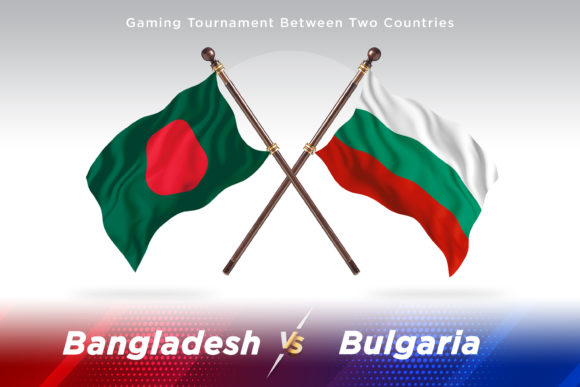
At first glance, the national flags of Bangladesh and Bulgaria might seem unrelated—one dominated by a deep green field with a bold red disc, the other a horizontal tricolor of white, green, and red. Yet placing them side by side reveals subtle visual echoes, contrasting design philosophies, and practical considerations worth examining. Whether you are designing a multicultural presentation, building a branding project that references South Asia and Eastern Europe, or simply satisfying professional curiosity, understanding these two flags on a deeper level adds real value.
Both flags carry strong national identities, unique color profiles, and distinct use cases in digital and physical environments. A structured comparison helps professionals in marketing, education, publishing, and creative fields make informed choices when displaying, reproducing, or referencing these symbols. This article breaks down what each flag represents, where they differ most, and how that knowledge applies across real-world scenarios.
Core Design Differences That Matter
The most immediate distinction lies in structure. The flag of Bangladesh follows a single-field-plus-emblem design: a rich green background with a slightly off-center red circle representing the rising sun over the Bengal delta. This disc is not perfectly centered—it sits fractionally toward the hoist side, a deliberate choice that creates visual balance when the flag waves.
Bulgaria’s flag, by contrast, uses a classic tricolor layout—three equal horizontal bands: white on top, green in the middle, and red at the bottom. No emblem, no offset elements. The simplicity is part of its power. For professionals working with flags in layouts, this means the Bulgarian flag scales cleanly at small sizes, while the Bangladesh flag demands more precise rendering to keep the disc proportionate and correctly positioned.
Color interpretation also diverges. The green of Bangladesh is a darker, forest-like shade, often described as bottle green, while the green in Bulgaria’s flag is noticeably lighter and brighter. Red appears in both—deep and solid in Bangladesh, slightly warmer in Bulgaria. These subtleties matter when matching flags for print projects, digital interfaces, or branded merchandise. A designer who treats the two greens as interchangeable risks a visibly mismatched final product.
Symbolism and What Each Flag Communicates
Understanding what each flag represents helps you deploy them appropriately in educational content, cultural articles, or international marketing materials.
Bangladesh’s green field symbolizes the lush landscape and the country’s Islamic heritage, while the red disc stands for the sun rising over Bengal and the blood of those who fought for independence. It is a flag deeply tied to a specific historical moment—the 1971 Liberation War—and carries emotional weight for Bangladeshis worldwide. When you use this flag, context matters. It is not just a geographic marker; it is a symbol of national pride and struggle.
Bulgaria’s tricolor dates back to the 19th century, with white representing peace and the Slava tradition, green signifying the fertile land and forests, and red reflecting the courage of the people. It is a more conventional European tricolor, but its specific shade of green is unusual among regional flags, giving it a distinctive identity. For marketers and educators, this flag often appears in discussions of Balkan history, EU expansion, or Slavic cultural heritage.
The practical takeaway: referencing these flags without acknowledging their meaning can feel flat or even insensitive. Adding a sentence about what the elements represent adds depth and shows respect for the culture—something readers and audiences notice.
Digital Design and User Interfaces
In web and app design, flag icons are common for language selectors, location filters, or country-specific content. The Bangladesh flag, with its single prominent shape, works well as a small icon—the red disc remains recognizable at 16x16 pixels. The Bulgarian flag, however, can become problematic at tiny sizes. Its three horizontal bands blur together, especially the green middle stripe, which may read as a thin line. If you are implementing flag dropdowns or country selectors, consider increasing the minimum icon size for tricolor flags like Bulgaria, or use simplified versions that preserve the band structure.
Color accessibility also plays a role. The red-on-green combination in the Bangladesh flag can create contrast issues for colorblind users, particularly those with red-green deficiency. Adding a subtle outline or tooltip reduces ambiguity. Bulgaria’s flag, with white separating green and red, poses fewer accessibility problems—another reason its tricolor structure holds up in low-resolution or fast-scrolling environments.
Print and Merchandise Production
If you are ordering printed materials—flags for events, promotional items, or packaging—know the color specifications. Bangladesh uses specific Pantone values: green (3425 C) and red (485 C). Bulgaria’s colors are white (no specific Pantone needed), green (354 C), and red (032 C). These are not interchangeable. Ordering a Bangladesh flag printed with Bulgaria’s lighter green will look visibly wrong to anyone familiar with either flag. Request a color proof, especially if both flags appear together in one design.
Fabric choice also matters. Bangladesh’s large red disc benefits from high-quality dye saturation to avoid a washed-out appearance. Bulgaria’s white band is prone to showing dirt or yellowing over time—consider treatable fabrics or darker backgrounds for long-term display.
Business and Branding Contexts
Companies doing cross-border work in both South Asia and Eastern Europe may display both flags in offices, presentations, or trade show materials. Positioning them side by side requires attention to visual hierarchy. The Bangladesh flag has a stronger visual weight due to the bold disc, while Bulgaria’s flag relies on horizontal symmetry. Arranging them in a vertical stack rather than side-by-side can create a more balanced composition. If you must place them horizontally, align the Bangladesh flag slightly lower so the disc does not overpower the Bulgarian stripes.
For slide decks or reports, use high-resolution vector files—SVG or EPS—rather than JPEGs. The clean edges of the tricolor and the circular element in the Bangladesh flag degrade noticeably in low-resolution raster formats.
Educational and Creative Use Cases
Teachers and content creators frequently compare flags to explain color theory, symbolism, or regional identities. The Bangladesh versus Bulgaria pair works especially well because it illustrates how the same color—green—can carry completely different cultural and environmental meanings. It also demonstrates structural contrast: the power of simplicity in Bulgaria’s tricolor versus the iconic single-element focus in Bangladesh’s design.
Creative professionals, including graphic designers and illustrators, can use the two flags as a case study in minimalist versus symbolic design. Bulgaria’s flag is a lesson in restraint—three colors, no imagery, yet instantly recognizable among European flags. Bangladesh’s flag shows how one well-placed element transforms a plain field into a memorable national emblem. These observations make for strong portfolio commentary or teaching points in design workshops.
Writers covering topics like national identity, post-colonial symbolism, or European heraldry find natural material here. The flags tell different stories: one born from a liberation movement in the 1970s, the other from 19th-century national revival. That contrast alone can anchor an entire article or chapter.
Practical Considerations When Using Both Flags
If your project involves displaying the Bangladesh and Bulgarian flags together, keep these recommendations in mind:
- Size consistency: Ensure both flags are displayed at the same scale. The Bangladesh flag’s proportions are 10:6; Bulgaria uses a 3:5 ratio. Cropping or framing may be needed to present them uniformly.
- Color fidelity: Never rely on screen colors alone. Request Pantone or hex values from official sources. For digital use, hex codes are #006A4E (green) and #F42A41 (red) for Bangladesh, and #FFFFFF (white), #00966E (green), #D62612 (red) for Bulgaria.
- Context sensitivity: Avoid pairing these flags in a way that implies political alignment, regional grouping, or economic comparison unless your content explicitly addresses that. Readers may infer unintended meaning from proximity alone.
- Licensing and respect: National flags are public domain, but that does not mean careless use is acceptable. Always display them upright, unmodified, and in accordance with each country’s flag code. Never overlay text or graphics on the red disc of Bangladesh’s flag; avoid altering the stripe order of Bulgaria’s.
Realistic Scenarios and Recommendations
Imagine you are organizing an international cultural fair with booths from dozens of countries. You print small flag pins for attendees. The Bulgarian flag, at 20mm wide, becomes a thin line of colors—hard to distinguish at a glance. The Bangladesh flag, even at that size, remains clearly identifiable. Solution: print Bulgaria’s flag slightly larger, or add the country name underneath. Small adjustments prevent confusion and improve attendee experience.
Or consider a freelance web designer building a multilingual site for a travel agency. The client wants country flags in the navigation bar. Testing shows users struggle to differentiate the Bulgarian tricolor from other European horizontal tricolors (like Russia or the Netherlands). The Bangladesh flag, however, gets instant recognition. For Bulgaria, adding the country name alongside the flag reduces errors. For Bangladesh, the flag alone suffices. These insights come directly from understanding each flag’s visual strengths and weaknesses.
For educators: a quick classroom exercise involves asking students to redesign each flag using the other’s structure—putting a red disc on a tricolor or turning the Bangladesh field into three bands. It reveals structural biases and deepens understanding of how design constraints shape national symbols.
Final Observations
Comparing the flags of Bangladesh and Bulgaria is not an abstract exercise. It has direct implications for designers, publishers, marketers, and anyone who works with visual national symbols. The Bangladesh flag teaches the power of a single, well-placed element. The Bulgarian flag demonstrates that simplicity, when executed with the right proportions and colors, never fades. Together, they offer a masterclass in how different design solutions accomplish the same goal—representing a nation with pride and clarity.
When you next encounter these two flags side by side, whether in a textbook, a trade show booth, or a digital interface, you will see more than just colors and shapes. You will see strategic decisions about visibility, cultural communication, and visual hierarchy. And you will make better choices about how to use them effectively in your own work.