Bangladesh vs Uzbekistan: Flags of Identity and Pride
Two flags. One tells a story of a sun rising from a sea of green after a long night of struggle. The other maps a celestial journey across the heart of Central Asia, drawing on ancient empires and natural abundance. Comparing the flags of Bangladesh and Uzbekistan is more than a geography exercise—it is a practical lesson in visual communication, cultural intelligence, and national psychology. For professionals, creators, and entrepreneurs, understanding what these symbols represent unlocks deeper insights into two dynamic markets and civilizations.
Decoding the Visual Identity: A Designer’s Perspective
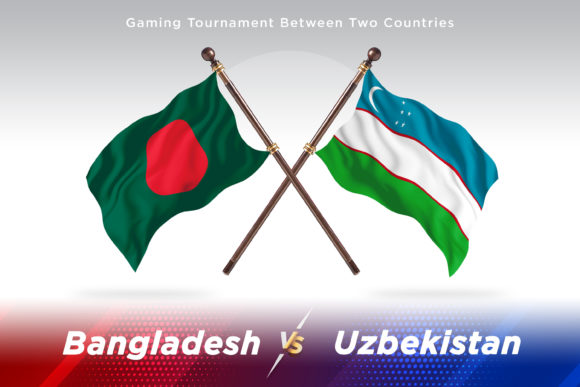
From a pure design standpoint, these two national flags sit at opposite ends of the visual spectrum. The flag of Bangladesh is a study in bold minimalism. A simple green field holds a red disc, slightly offset toward the hoist. There are no stripes, no borders, no secondary elements. The composition is direct, powerful, and instantly recognizable. This simplicity is not accidental—it was designed to be mass-produced and flown during a liberation struggle, prioritizing clarity and emotional impact.
The flag of Uzbekistan, adopted in 1991, is far more intricate. It features a horizontal tricolor of light blue, white, and light green, separated by thin red stripes. At the top left, a white crescent moon sits alongside twelve white stars. For a graphic designer or visual artist, this presents a rich set of elements to deconstruct. The multiple stripes create rhythm, while the celestial symbols add narrative complexity. Where the Bangladeshi flag communicates urgency and singularity of purpose, the Uzbek flag communicates heritage, order, and aspiration.
Practical takeaway for creators: If you are designing a brand identity, the contrast between these two flags illustrates two powerful strategies. Bangladesh’s flag shows the strength of a singular, emotionally charged focal point. Uzbekistan’s flag demonstrates how multiple elements can coexist harmoniously to tell a layered story. Both approaches are valid, and choosing between them depends on whether you want your audience to feel one thing immediately or many things over time.
The Language of Color: What These Flags Communicate
Color psychology plays a critical role in marketing, branding, and cross-cultural communication. Misreading a flag’s color symbolism can lead to embarrassing or even offensive mistakes in business contexts. Here is what the colors mean in each flag, and why they matter to professionals engaging with these nations.
Bangladesh: The deep green field represents the lush landscape of the country, as well as the Islamic heritage of the majority population. The red disc has dual meaning: it is the blood shed by martyrs during the 1971 Liberation War, and it is the rising sun of a new, independent nation. The red is not a generic accent—it is a reminder of sacrifice and renewal. When using these colors in a presentation or design for a Bangladeshi audience, the green conveys respect for the land, while the red commands attention and reverence.
Uzbekistan: The light blue at the top is the color of the Turkic sky and a direct reference to the banner of Amir Timur, the medieval conqueror who made Samarkand his capital. White symbolizes peace and purity. Green is the color of nature and fertility, as well as Islam. The thin red stripes represent the life force and vitality of the nation. The crescent and twelve stars are celestial symbols tied to the historical Uzbek calendar and the hope for spiritual growth. For a marketer or entrepreneur, the blue is particularly significant—it evokes trust, heritage, and a connection to the ancient Silk Road. Using sky blue in packaging or branding for the Uzbek market can tap into deep cultural pride.
Benefit for professionals: Understanding these color nuances allows you to tailor visual communications with precision. In Bangladesh, green and red must be handled with solemn respect. In Uzbekistan, the blue and white evoke a sense of historical continuity and peace. A generic approach to “national colors” misses these layers entirely.
Historical Context: Understanding the “Why” Behind the Design
For educators, bloggers, and travelers, the history behind each flag transforms a graphic into a narrative. The Bangladeshi flag was originally designed in 1971 and included a golden map of the country inside the red disc. The map was removed after independence because it proved difficult to replicate consistently on both sides. This decision reflects a practical priority—the flag had to be reproducible by ordinary people during wartime. It is a flag born of struggle, not a committee room. It speaks to resilience and grassroots identity.
The Uzbek flag, in contrast, was consciously crafted after the dissolution of the Soviet Union. It represents a deliberate effort to reclaim a pre-Soviet identity. The twelve stars are often associated with the twelve districts of the country or the twelve months of the year, symbolizing unity and completeness. The crescent is a quiet assertion of Islamic heritage after decades of Soviet secularism. This flag is an act of cultural reclamation. For a political science student or an international business analyst, this context explains the deep attachment Uzbeks have to their flag—it represents not just a country, but a cultural rebirth.
For Business and Entrepreneurship
If you are negotiating a partnership in Dhaka or Tashkent, demonstrating awareness of national symbols builds instant rapport. Mentioning the meaning of the red disc in Bangladesh shows you understand the sacrifice that underpins the nation’s independence. Discussing the Timurid blue in Uzbekistan shows respect for the nation’s historical legacy. These are small gestures, but they signal cultural intelligence (CQ). In both markets, personal relationships matter immensely, and respect for national identity is a cornerstone of trust.
For Content Creators and Bloggers
A comparative article on “Bangladesh Versus Uzbekistan Two Flags” is a powerful SEO and audience engagement tool. It allows you to discuss geography, history, politics, and design in a single focused piece. For a travel blogger, using the flags as thematic anchors for photo essays can create visual cohesion. For a design blogger, deconstructing the flags offers a concrete case study in minimalist versus maximalist national branding. The contrast is inherently interesting because the countries are rarely compared directly—this gives your content a unique angle.
For Software and Design Teams
Localization teams working on interfaces for South Asian or Central Asian markets can draw directly from these flags. The color palette of the Bangladeshi flag (hex #006a4e and #f42a41) offers a high-contrast, accessible combination suitable for bold calls to action. The Uzbek palette (sky blue, white, green, and red accents) offers a calmer, more layered aesthetic appropriate for lifestyle or heritage apps. Studying these flags provides a shortcut to understanding regional aesthetic preferences.
Who Benefits Most From This Comparison?
- International marketers and brand strategists who need culturally aligned visual assets for campaigns in South and Central Asia.
- Graphic and UX designers looking for research-backed color palettes and compositional strategies.
- Travel and culture bloggers seeking a compelling framework for comparing two fascinating countries.
- Entrepreneurs and small business owners sourcing textiles, garments, or agricultural products from Bangladesh or Uzbekistan—understanding national pride strengthens supplier relationships.
- Educators and curriculum developers teaching comparative politics, design history, or cultural studies.
Limitations: What a Flag Comparison Doesn’t Cover
While comparing “Bangladesh Versus Uzbekistan Two Flags” provides valuable insights, it is important to acknowledge the boundaries of this analysis. A flag is a state symbol, and it represents an official national narrative. It does not capture regional, ethnic, or political diversity within the country. For example, the Bangladeshi flag does not explicitly represent the indigenous communities of the Chittagong Hill Tracts. The Uzbek flag’s unified celestial imagery does not address the vibrant diversity of languages and traditions across the country. A thoughtful reader will use this comparison as a starting point for deeper exploration, not as a definitive cultural guide.
Additionally, flag etiquette differs. In Bangladesh, the flag is flown prominently during national holidays and sporting events, and the national anthem is taken very seriously. In Uzbekistan, the flag is treated with similar reverence, but the visual culture also includes extensive use of state emblems and presidential imagery. Understanding these differences helps you avoid unintentional disrespect. For instance, using a national flag purely decoratively on a product label might be acceptable in some markets but considered inappropriate in others.
A Balanced View: Practical Recommendations
For the reader who wants to apply these insights, start small. If you are designing a presentation for a mixed audience, avoid using national flags as generic backgrounds—this can dilute the meaning and risk offending someone. Instead, use the color palettes thoughtfully. If you are writing an article, use the flags as a framing device, but ground your analysis in real economic, social, or historical data. The flags are entry points, not conclusions.
For creators looking at Bangladesh Versus Uzbekistan Two Flags as a topic, consider creating a side-by-side visual infographic. Show the color breakdowns, the historical timelines, and the symbolic meanings. This kind of content performs well on platforms like Pinterest, LinkedIn, and educational blogs because it consolidates complex information into an accessible, comparative format. It is both shareable and substantive—a rare combination in the content landscape.
Ultimately, the flags of Bangladesh and Uzbekistan offer a masterclass in how nations choose to represent themselves. One opts for simplicity and emotional directness. The other opts for complexity and historical resonance. Both are effective, both are deeply meaningful to their people, and both reward the attentive observer with a richer understanding of two vibrant cultures. Whether you are a professional seeking market entry, a creator looking for inspiration, or simply a curious learner, taking the time to decode these symbols is an investment in genuine cultural fluency.