Bahrain Versus Mali Two Flags: Design, Symbolism, and Modern Relevance
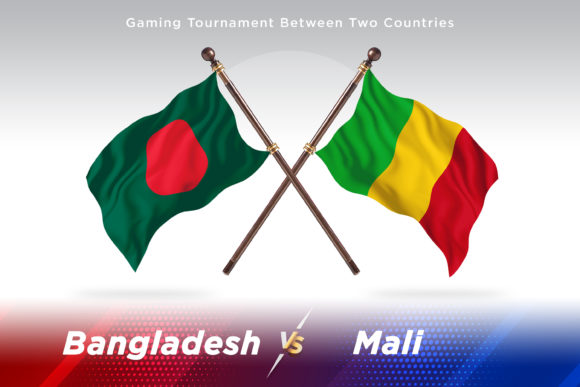
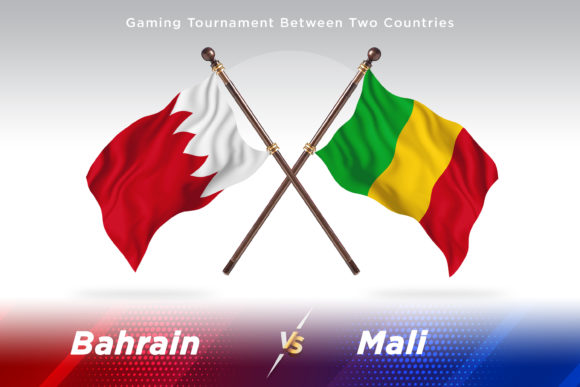
The flags of Bahrain and Mali may not be the first pairing that comes to mind when comparing national symbols, yet they offer a fascinating study in contrast and context. Bahrain’s flag features a bold red field with a white serrated band on the hoist side, while Mali’s flag is a vertical tricolor of green, yellow, and red. At first glance, the two share no obvious structural similarity—Bahrain relies on a single dominant color with a distinctive geometric border, whereas Mali uses a classic tri-band layout. But what makes their comparison useful is how each flag embodies very different design philosophies, historical narratives, and practical considerations for anyone working with flags in design, branding, or education.
Understanding the Design and Symbolism of Each Flag
Bahrain’s current flag, adopted in 2002 after a slight modification to the serrated edge, is rooted in the red flag of the Kharijites and later the British-protected state. The red represents the traditional color of the ruling al-Khalifa family and the blood of martyrs, while the white band symbolizes peace and the 1820 General Maritime Treaty with Britain. The five points of the serration are often said to represent the five pillars of Islam, though this is a modern interpretation. The flag is intentionally simple, with high contrast and a unique shape that makes it instantly recognizable even from a distance.
Mali’s flag, adopted in 1961 shortly after independence from France, follows the classic tricolor pattern common across many West African nations. The green stripe stands for hope and fertility, the yellow for purity and mineral wealth, and the red for the blood shed for freedom and independence. The design is almost identical to that of Senegal, save for a star in the center of Senegal’s flag—a point Mali’s designers deliberately avoided to maintain a clean, unadorned look. The flag’s colors are drawn from the Pan-African palette, linking Mali to a broader continental identity. Its simplicity makes it easy to reproduce and memorable, but also vulnerable to confusion with other green-yellow-red tricolors.
When placed side by side, Bahrain’s flag feels active and asymmetrical, while Mali’s is balanced and uniform. This difference is not just aesthetic—it reflects deeper cultural priorities. Bahrain’s flag emphasizes a clear political and religious heritage with a sharp visual break, while Mali’s flag projects unity, hope, and a forward-looking Pan-African vision.
Why These Two Flags Matter in Current Trends
In an era where visual identity is more critical than ever—especially for small nations, brands, and digital creators—understanding the nuances between flags like Bahrain’s and Mali’s has real-world relevance. National flags are no longer just official government symbols; they appear everywhere from social media emoji keyboards to corporate logos, sports merchandise, and tourism campaigns. The Bahrain versus Mali comparison illustrates how even simple designs can carry layers of meaning that affect perception, recall, and usability.
For marketers and content creators working with international audiences, knowing the difference between these flags—and the stories behind them—can prevent embarrassing errors. For instance, using the wrong flag in a targeted ad or infographic can undermine credibility. Similarly, for UX designers who work with localization, understanding flag distinctiveness helps in selecting appropriate iconography for regional interfaces. Bahrain’s flag, with its serrated edge, is one of the most unique in the world. Mali’s flag, while less distinctive, is still iconic in its own right due to its strong color association with West African identity.
Practical Implications for Professionals and Creators
If you are a blogger writing about travel, business, or geopolitics, you need to discuss Bahrain versus Mali with precision. Consumers of content today expect accuracy—they notice when a flag is wrong or poorly explained. A simple mistake can erode trust. Here are practical takeaways:
- For web designers: When using flags as UI elements, consider that Bahrain’s flag has a non-standard aspect ratio (3:5 instead of 2:3 in many cases) and a complex border that may not scale well in tiny icon sizes. Mali’s flag is more forgiving due to its three vertical bands, but both require care to avoid distortion.
- For social media managers: Know the cultural significance. Posting an image of Mali’s flag during a sports event without contextual explanation might be seen as tone-deaf, especially given its association with Pan-African solidarity. Bahrain’s flag is often used in discussions of Gulf politics and religious identity.
- For educators and journalists: Use the differences to teach vexillology basics—color symbolism, evolution of design, and how treaties and independence movements shape flags. The Bahraini flag’s 2002 change (reducing the number of serrations and making them more angular) is a great example of how flags evolve to reflect contemporary values.
How the Topic Has Evolved and Why People Pay More Attention
Twenty years ago, most people would have struggled to point out either Bahrain or Mali on a map, let alone describe their flags. Today, with global travel, migration, and digital communication, these symbols are far more visible. The rise of flag-based social media filters, emoji updates (both flags are in the standard emoji set), and even fashion have brought flags into everyday life. The Bahrain versus Malta comparison is also common in trivia, but Bahrain versus Mali is emerging as a subtler contrast—especially because their color palettes are completely different, which makes their coexistence in the same conversation interesting.
Vexillology (the study of flags) has gained popularity through online communities, YouTube channels, and even TED talks. Designers now cite flag principles when creating logos. Bahrain’s flag is praised for its bold simplicity: a single color with a clean, repeated shape. Mali’s flag is a textbook example of the basic tricolor, but its lack of a distinctive central emblem makes it a cautionary case for designers who want uniqueness without clutter. The evolution of both flags reflects changing needs: Bahrain moved away from a simpler red flag with a white stripe to the modern serrated version for distinction; Mali kept its post-independence design largely unchanged, relying on color association rather than unique shapes.
People pay more attention now because flags are more than geopolitical markers—they are brand assets. A nation’s flag influences its tourism logo, the color palette of its airline, and even the uniforms of its athletes. For a country like Bahrain, which invests heavily in international business and sports (Formula 1, for example), the flag appears on global media constantly. Mali, with a smaller international profile, uses its flag in diplomacy and cultural exports like music and film. Recognizing where each flag appears and why helps professionals anticipate visual context.
Practical Recommendations for Engaging with These Flags
Whether you are a digital creator, a business owner expanding into new markets, or a curious reader, here are grounded recommendations for working with or learning from the Bahrain versus Mali comparison:
- Study the color codes. Bahrain uses a specific shade of red (often Pantone 186 C) and white. Mali uses green (Pantone 355 C), yellow (Pantone 116 C), and red (Pantone 186 C). Using exact colors matters for printing, digital design, and official representations. Always verify the correct hex codes and CMYK values if accuracy is required.
- Respect the context. Never use a national flag as a mere decorative element without relevance. If you are writing about Bahrain’s economy, use its flag sparingly and meaningfully. The same applies to Mali. Overusing flags can cheapen the message and even offend those who hold the symbol sacred.
- Teach through contrast. When explaining flag design to students or team members, use the Bahrain vs. Mali example. Ask: Why does one country choose a serrated line while the other stays with vertical bands? What does each choice say about national identity and historical experience? This exercise builds cultural literacy and design thinking.
- Check emoji rendering. On many platforms, the Bahrain flag emoji (🇧🇭) and Mali flag emoji (🇲🇱) are displayed as just two-letter codes. Ensure your audience can see the actual flag images, especially in marketing materials where appearance matters.
- Use flags in storytelling. A blog post about “Bahrain Versus Mali Two Flags” can go beyond design to discuss trade relationships, sports rivalries, or UN voting patterns. The flags serve as entry points to deeper conversations.
Real-World Observations and Examples
I recall attending a university lecture where the professor projected ten flags and asked students to identify them. Bahrain was almost always confused with Qatar (which has a similar design but different proportions and shade of red). Mali was often mistaken for Guinea or Cameroon. That simple exercise highlighted how much we rely on subtle cues—the number of points on a sawtooth, the order of colors. For a professional creating an educational video, this is a goldmine: show the flags side by side, animate the differences, and test retention. It is both engaging and instructive.
Another example comes from the digital design space. A freelance web designer once shared how a client wanted to use the Bahrain and Mali flags in a dropdown menu for a global e-commerce site. The client assumed both flags would similarly represent “Middle East” and “Africa” regions. But the designer realized that the flags themselves communicate very different user expectations—a user clicking the Mali flag expects French or Bambara language options, not Arabic. Contextually pairing flags with languages and currencies is a subtle art that the Bahrain versus Mali comparison illustrates well.
Looking Ahead: The Continued Relevance of Flag Comparisons
As the world becomes more visually literate, flags will remain critical touchstones. The Bahrain versus Mali contrast is not likely to become a mainstream meme, but for those who work with global symbols, it is a practical case study. It reminds us that good design is rooted in clarity and meaning, that every color and line has a story, and that even the simplest flag can be a powerful communication tool when understood properly.
We live in a time when people want authenticity and cultural intelligence. A marketer who can explain why Bahrain’s flag has five white points and why Mali’s flag has no star will earn credibility. A teacher who uses these flags to talk about colonial history, independence movements, and modern national identity gives students a richer grasp of the world. And a designer who respects the original intent of these symbols—while adapting them for screens, prints, and merchandise—contributes to a more visually respectful global culture.
In the end, the question is not which flag is better, but what each says about the people it represents. Bahrain and Mali are vastly different countries with distinct landscapes, languages, and traditions. Their flags reflect those differences clearly. Taking the time to understand them is not just an academic exercise—it is a practical skill for anyone navigating our increasingly interconnected visual world.